Safety High-Protein Food List for Long-term Storage
I'm an immigrant with Celiac and MCAS, living in a rented room with unreliable power. Here is the shelf-stable pantry runbook I created with Gemini to survive low-energy days and cash gaps.

People who have lived in the same house for decades have a hidden superpower: the generational pantry. They have cans of beans and boxes of baking soda at the back of their shelves that have been there for years, quietly waiting for an emergency.
As an immigrant living in a rented room in a spare apartment in a new country (I’ve been in Georgia for about two years now) I don’t have that privilege. Usually, my food supply only lasts about a week.
Recently, I realized this living situation, combined with my specific biology and lifestyle, was creating a perfect storm for nutritional disaster.
Here are the constraints I’m working with:
-
I am a neurodivergent female in premenopause with Celiac disease and MCAS (Mast Cell Activation Syndrome). This means my diet must be gluten-free, non-inflammatory, and high in protein.
-
I love fresh vegetables and fruits, but because I focus so heavily on fresh plants, I often realize too late that I haven’t bought enough grains, legumes, or protein to keep me full.
-
I love to cook and usually prepare every meal myself. But there are days when my energy is completely flatlined, or work is too overwhelming. When that happens, my grand cooking plans collapse, and I end up eating KFC or dumplings just to survive.
-
As an entrepreneur, I sometimes experience cash gaps. If a gap lasts longer than a week, my pantry empties out entirely.
-
I live in Tbilisi, where energy shutdowns are very common. Relying on a freezer for long-term meal prep or meat storage just isn’t a safe option.
I needed to help myself. I needed an emergency stash that required zero refrigeration, wouldn’t trigger my immune system, and could sit quietly in my limited space until a low-energy or low-cash day hit.
I sat down with Gemini, laid out all my restrictions, and asked for a comprehensive list of high-protein, shelf-stable foods and storage strategies. Together, we built the following runbook. If you are an expat, a nomad, or just someone with a lot of dietary restrictions and very little fridge space, I hope this helps you, too.
The Runbook: Food List for Long-Term Storage
This food list is based on high-protein sources (animal and plant-based) meant for long-term storage without refrigeration.
Animal-based high protein pantry
Animal sources are considered “complete” proteins because they contain all nine essential amino acids your body cannot make on its own.
Canning locks in freshness and allows proteins to last anywhere from 2 to 5 years on the shelf. Outside of cans, jerky and biltong are also go-to options.
Fish & Seafood
- Canned in water or olive oil:
- Canned tuna
- Canned salmon
- Canned sardines
- Canned mackerel
- Canned herring
- Canned anchovies
- Canned sprats
- Canned mussels
- Canned squid or octopus
- Pouched (convenient, lightweight foil packs):
- Pouched tuna
- Pouched salmon
Meat
-
Canned in water:
- Canned chicken breast
- Canned turkey breast
- Canned beef (chunks or shredded)
- Canned pork or ham
-
Pouched (lightweight, zero-prep foil packs):
- Pouched chicken breast
- Pouched turkey breast
-
Jerky:
- Beef jerky
- Chicken jerky
- Pork jerky
- Turkey jerky
-
Cured Meat:
- Biltong (air-dried cured meat)
Pro-Tip: Because you are rotating these items over weeks and months, look for pouches instead of cans whenever possible. Pouches take up very little space, don’t require a can opener, and are incredibly convenient if you want to grab them for quick meals, day trips, or hiking routes.
Other animal-based protein sources
- Powdered whole eggs
- Whey or casein protein powders
- Dehydrated cheese crisps (parmesan)
Plant-based high protein pantry
If you lean vegetarian or vegan, or just want more variety, plant proteins are fantastic. They also come loaded with dietary fiber, which animal proteins lack.
Dry plant proteins can last for years when kept in a cool, dark place. They are also incredibly cost-effective.
Legumes
- Dry:
- Lentils (red, green, brown)
- Split peas
- Chickpeas (Garbanzo beans)
- Beans (black, kidney, pinto, white)
- Canned:
- Canned chickpeas
- Canned black beans
Whole Grains
- Quinoa (white, red, or tricolor)
- Buckwheat (Grechka)
- Wild rice
- Brown rice (long grain or Jasmine)
- Oats (rolled or steel-cut)
- Millet
- Amaranth
Nuts & Seeds
- Nuts:
- Almonds
- Walnuts
- Cashews
- Hazelnuts
- Seeds:
- Pumpkin seeds
- Sunflower seeds
- Chia seeds
- Flaxseeds (whole or ground)
- Hemp seeds (hemp hearts)
- Nut Butters:
- Peanut butter
- Almond butter
- Tahini (sesame paste)
Other plant-based sources
- Soy-based shelf-stable tofu
- Textured Vegetable Protein (TVP)
- Plant protein powders
- Chickpea or lentil-based pasta
- Roasted edamame or fava bean snacks
The Stop List for Pantry
What to avoid when you are stocking up your pantry, cause when navigating Celiac and MCAS, reading labels and making sure food is safe, is non-negotiable.
Gluten Triggers
- Wheat derivatives (Farro, Bulgur, Couscous)
- Barley (pearl or hulled)
- Dry powdered milk
- Canned meat pâté or rillettes
- Standard soy sauces and marinades (Unagi, Teriyaki, Hoisin, Worcestershire) unless explicitly certified Gluten-Free or substituted with Tamari/Coconut Aminos.
- Generic “modified starch” or thickeners (like E1422 that can be found in jerky) unless the source is explicitly stated as corn, potato, or tapioca.
- Maltodextrin
Inflammatory Triggers
- Seed and vegetable oils (Sunflower, Corn, Soybean, or blends)
- Canned fish/meat packed in sunflower or seed oils
- Dry-cured sausages (whole sticks of salami or chorizo)
- Canned ready-to-heat meals (stews or chili with meat)
- Refined or instant grains (e.g., standard couscous)
- Deep-fried or heavily charred foods
- High-Fructose Corn Syrup (HFCS) or added sugars appearing early in the ingredients of savory items.
- Chemical Flavor Enhancers (E621/MSG, E627, E631)
- Artificial Colorings (e.g., Caramel Color / Simple Caramel 1)
Warning: If a shelf-stable meat or fish product has more than 5 ingredients or contains words ending in -dextrin, -ate, or lists a string of E-numbers, it belongs on the temporary “Stop List” until verified.
Warning: STOP if you see: cellulose powder, potato starch, corn starch, or “natural flavors.”
My First Batch of Food supply
The master full list of pantry above is huge. So, I asked Gemini to give me top picks from each category to buy first.
Here is what I got:
- Red lentils
- Canned chickpeas
- Buckwheat (Grechka)
- Quinoa
- Peanut butter
- Pumpkin seeds
- Canned tuna
- Canned or pouched chicken breast
- Beef jerky
- Textured Vegetable Protein (TVP)
- Chickpea or lentil pasta
I opened the Wolt app, chose Wolt Market as usual, and started picking up items from the list above, focusing on items that were in stock and checking labels for hidden ingredients.
For quinoa I chose the red one, cause it’s my favorite. TVP and legume-based pasta i never tried before, but i found nice options and added them.
For canned tuna I picked in olive oil, cause the option in water was not available in this time. Also I found pouched tuna, it’s interesting, and I added it to try.
The jerky selection here is quite extensive, with many different variations, but the base is usually either chicken or pork. I chose pork jerky with a minimal amount of additional ingredients and generally safe ingredients.
Additionally, I found soy-based shelf-stable tofu and added it to my order. Let’s see how it tastes.
Here is a look at the final first haul I ordered in Wolt Market to start building my supply:
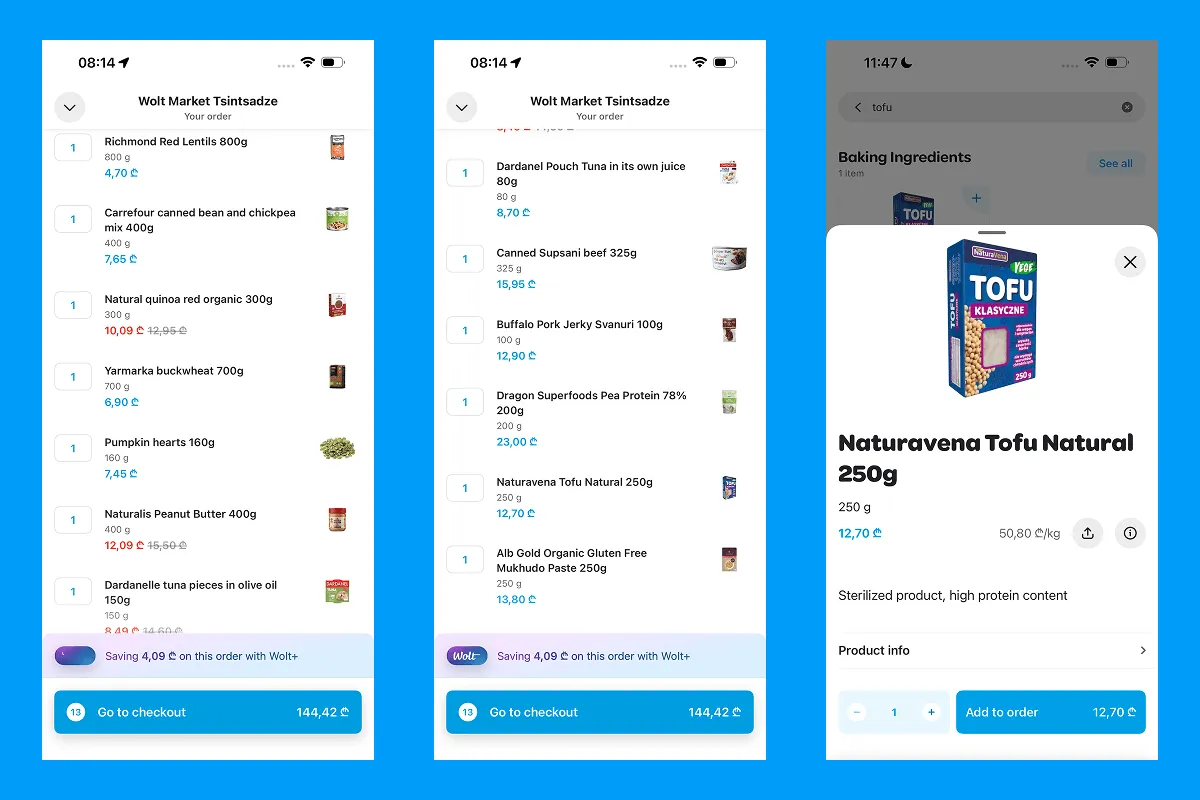
My first pantry haul in Wolt Market
Storage Strategies
Mylar Bags
Mylar bags are excellent for long-term storage of dry goods, keeping them safe from moisture and pests.
Warning: Unlike dry lentils and grains, nuts, seeds, and nut butters contain high amounts of natural oils. Because of this, do not seal them in Mylar bags with oxygen absorbers for long-term storage, as they can spoil or become unsafe. Keep them in their original airtight packaging or glass jars, and consume them within their standard shelf life (usually 6 to 12 months).
Containers
For daily or weekly rotation, I recommend:
- Push-Button Pop Containers
- Flip-Clamp Glass Jars
- Gravity-Fed Countertop Dispensers
Conclusion
Life has taught me that being prepared is one of the most powerful expressions of self-care. When my energy is low, my cash is tight, or the lights go out, I am not helpless. I have a pantry full of fuel, a mind clear of panic, and a plan that keeps me fed, stable, and moving forward.
I hope this runbook helps you build your own safety net. Because no matter how chaotic the world gets, your nourishment and your well-being are always worth protecting.
Stay safe, eat well, and keep that emergency stash full.